
The 5% WhatsApp fee is gone from 1 October, plus what's changing in Meta's pricing
If you send WhatsApp messages through your account, this is a good one. From 1 October 2026, the 5% processing fee on every WhatsApp message goes away. Marketing, utility, service, all of it.
From that day, you pay Meta's published rate to the cent. Nothing added on top. You can open Meta's rate card, open yours, and the numbers will match line for line.
What actually changes
The 5% comes off your rate in every market and every message category. There is nothing to switch on. It applies automatically to every account on 1 October.
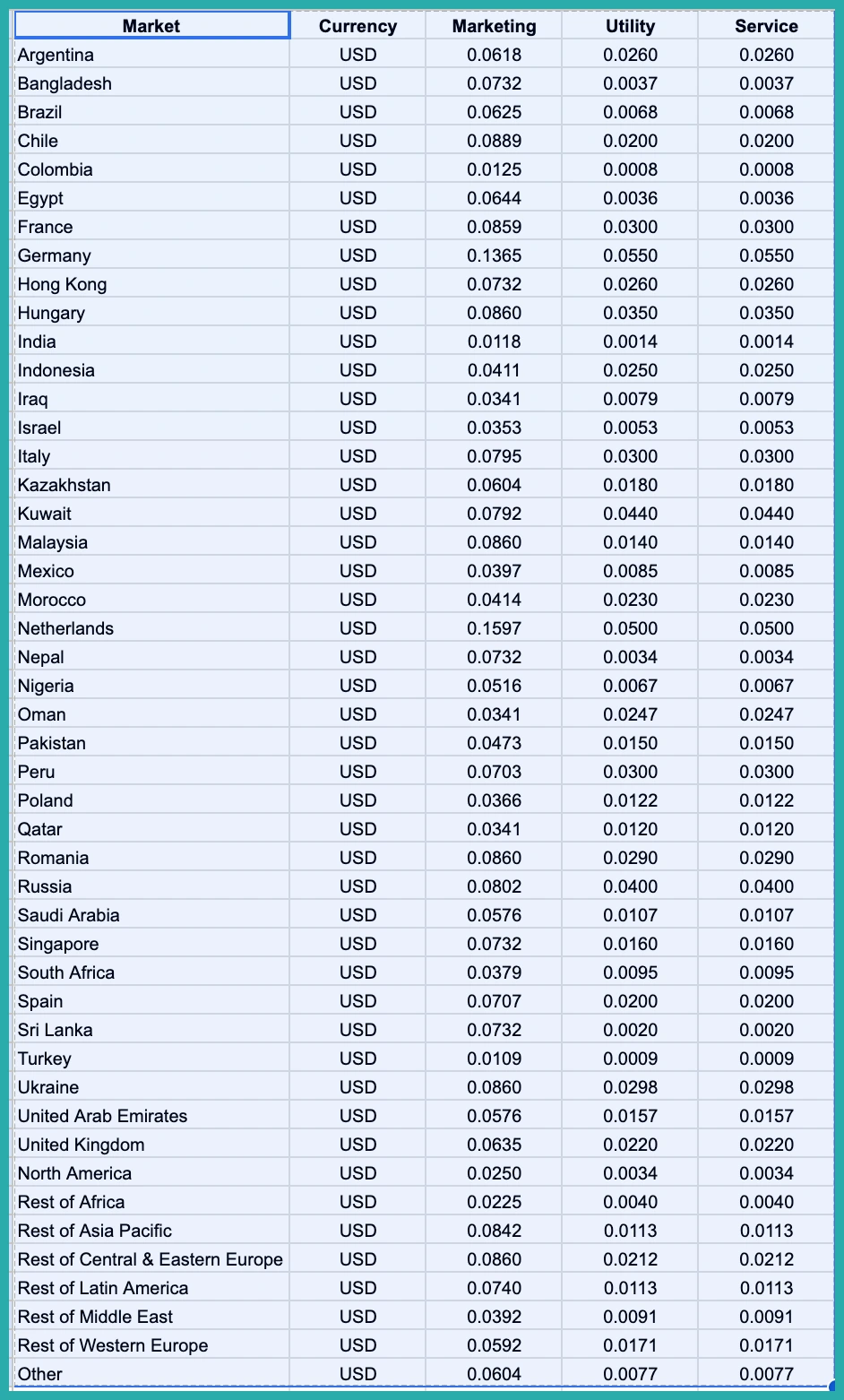
Here is what a marketing message costs today versus what you'll pay from 1 October:
- United States / Canada: $0.0263 to $0.0250
- United Kingdom: $0.0667 to $0.0635
- Spain: $0.0742 to $0.0707
- Brazil: $0.0656 to $0.0625
- India: $0.0124 to $0.0118
- Colombia: $0.0131 to $0.0125
Because Meta publishes its rates openly and yours now match them, you can quote a client and prove your numbers instead of explaining a fee they can't see.
Two message types become billable
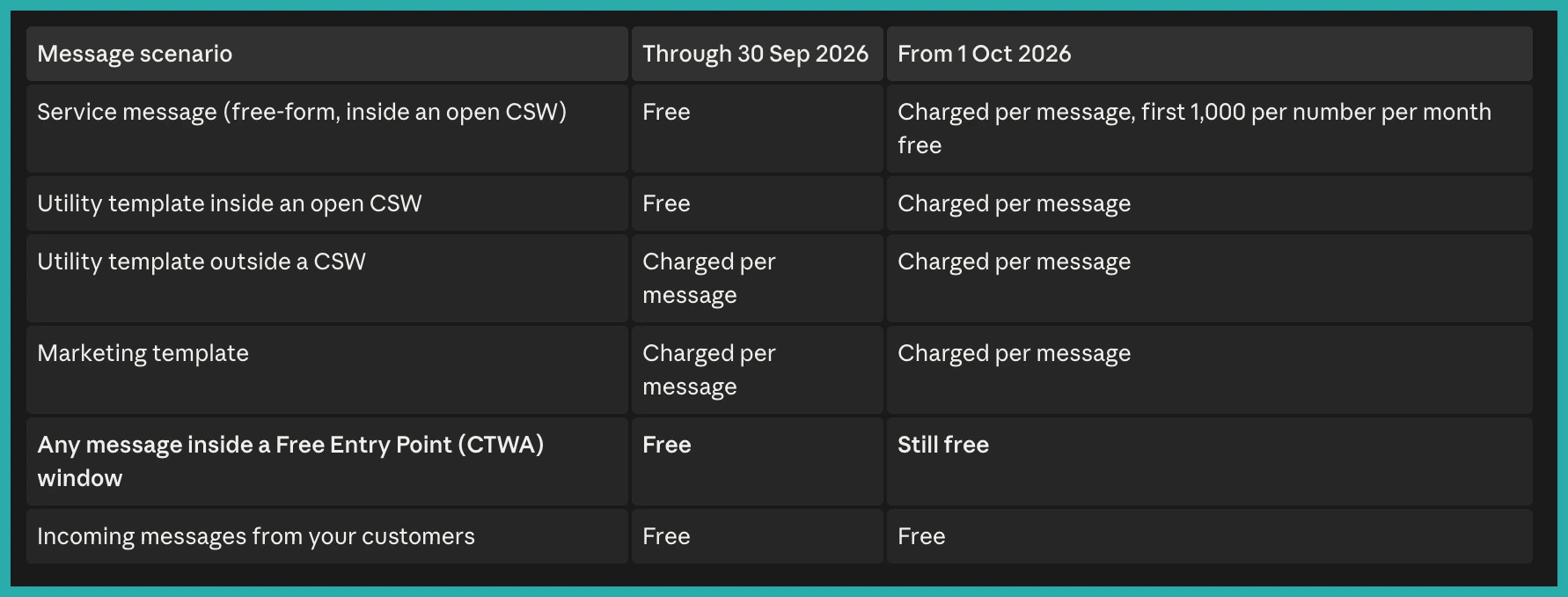
Alongside the good news, two categories that have been free are returning to billable from 1 October 2026. Both are charged per message, the same way template messages already are.
Service messages. Any free-form reply you send inside an open 24-hour customer service window, including manual Inbox replies, workflow replies and Conversation AI replies. These have been free since November 2024. From 1 October they're billable again, but the first 1,000 per phone number each month are free.
In-window utility messages. Utility messages sent in reply to a user, inside the 24-hour window, will now be charged too. From 1 October, a utility message is billable whether it goes out inside or outside the window.
How the 1,000 free service messages work
This allowance is worth understanding, because it covers a lot of routine support at no cost.
- It's counted per WhatsApp phone number, not per account and not per contact.
- The first 1,000 service messages sent from that number in a calendar month are free.
- Once you pass 1,000, every extra service message that month is charged per message.
- The counter resets to zero at the start of the next month. Unused allowance does not roll over.
If your numbers stay under 1,000 service messages a month, this change won't touch you.
Free Entry Point windows stay completely free
This is your single biggest lever for keeping costs down. Nothing about Free Entry Point changes on 1 October.
When someone messages you from a Click to WhatsApp ad or a Facebook Page call-to-action button on the Android or iOS app, a 24-hour window opens as normal. If you reply within those 24 hours, that reply is free and it opens a 72-hour Free Entry Point window from the moment you replied.
While that window is open, you can send any type of message at no charge, including service messages and utility templates that would otherwise be billable.
One thing to watch: the customer service window and the Free Entry Point window are separate. If the 24-hour window closes, you can only send template messages, even though the Free Entry Point window is still open and those templates are still free.
In practice, route more first-touch traffic through Click to WhatsApp ads and Page buttons. Every conversation that starts there gives you three days of free messaging, which the new service charge doesn't affect.
A note on rate cards and standalone markets
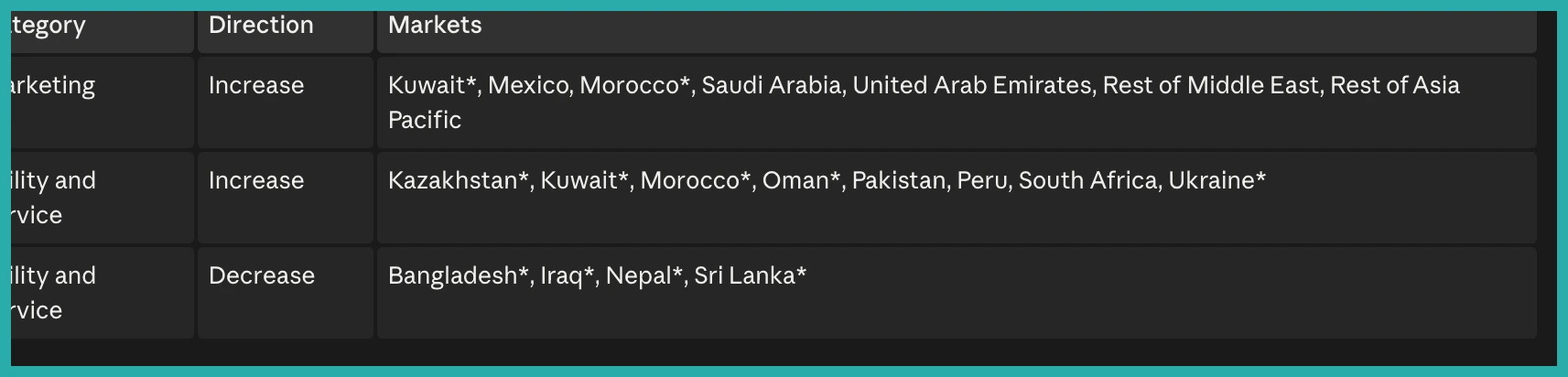
Per-message rates are updating in some markets from 1 October 2026. In a handful of markets, Meta's increase is larger than the 5% being removed, so your rate there is a little higher than today. Everywhere else, your rate drops. The nine markets with utility rate updates were given four months' notice rather than the usual one.
A further nine markets also become standalone on the rate card from 1 October: Bangladesh, Iraq, Kazakhstan, Kuwait, Morocco, Nepal, Oman, Sri Lanka and Ukraine. Until 30 September they're priced at their regional "Rest Of" rate. From 1 October each gets its own line and its own per-message rate.
What to do before 1 October
A short checklist so nothing catches you out:
- If you resell WhatsApp, review your rebilling multiplier. Go to Agency dashboard, then Reselling, then WhatsApp, then Manage. Rebilling is a multiplier on cost, so your client price moves with the rate. Set it where you want it ahead of 1 October.
- Audit your high-volume support flows. Accounts that lean on free-form replies and Conversation AI are the most exposed to the service-message change.
- Keep using Click to WhatsApp ads. Those Free Entry Point conversations stay free for the full 72 hours.
- Watch your per-number volume. Numbers under 1,000 service messages a month are unaffected.
- Set a wallet balance alert. Head to Settings, then Company Billing, so a rate change never interrupts your sending.

The short version: you're paying less per message from day one, your rebilled accounts follow the new rate automatically, and your pricing is now Meta's number and nothing else. Take five minutes before 1 October to check your multiplier and set a wallet alert, and you'll be set.
