What Is a Growth Funnel - And How Do You Build One Without the Tech Chaos?
If you have been trying to grow an online business for any length of time, you have heard the word "funnel" more times than you can count. You have probably also noticed that most of the advice about funnels seems to be written for people with marketing teams, ad budgets, and a dedicated tech person on call.
You have none of those things - and neither does most of this audience.
So this post does something most funnel content does not - it strips the whole thing back. What a growth funnel actually is. What one looks like for a solopreneur or coach running a lean online business. Where most people go wrong. And how to build one without turning it into a six-month tech project.
What Is a Growth Funnel in Plain Language
A growth funnel is the path a person travels from never having heard of you to becoming a paying client.
That is it.
The word "funnel" exists because not everyone who discovers you will buy from you - and that is completely normal. A large number of people enter at the top (they find you, they follow you, they land on your page). A smaller number move through the middle (they sign up, they engage, they consider what you offer). A smaller number still come out the bottom as clients.
Your job is not to convince every person who finds you to buy. Your job is to make sure the right people - the ones who genuinely need what you offer - have a clear, simple path to saying yes.
A growth funnel is just that path, made intentional.
Growth Funnel vs Acquisition Funnel - Is There a Difference
You will see both terms used online, often interchangeably. For the purposes of running a small online business, treat them as the same thing.
An acquisition funnel describes the process of acquiring new leads and clients - attracting them, capturing their details, and converting them. A growth funnel does the same, with a slightly broader lens that can include retention and referral as part of the overall picture.
In practice, if you are a coach or solopreneur just getting your funnel in place, you do not need to worry about the distinction. Build something that moves people from stranger to subscriber to client. That is your funnel, whatever you call it.
What a Simple Growth Funnel Actually Looks Like

Most funnel diagrams you find online look like something a marketing agency built for a Fortune 500 company. Ignore those.
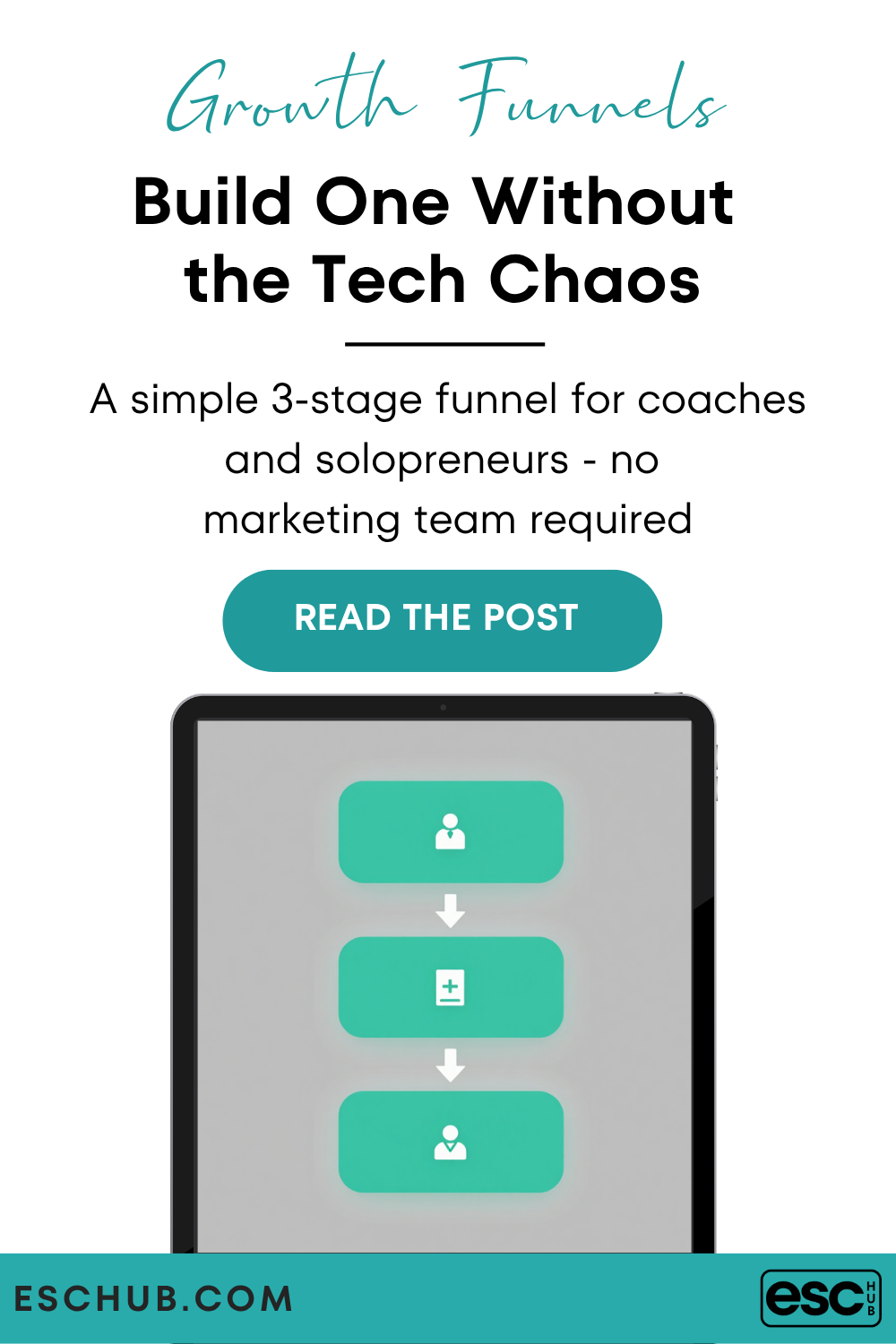
For a lean online business, a growth funnel has three parts:
Attract. Someone finds you. This might be through a blog post, a social media post, a Google search, a referral, or a lead generation community.
They do not know you yet, but something got their attention.
Capture. They take a small step toward you. Usually this means exchanging their email address for something useful - a free guide, a checklist, a short training, a resource that solves a specific problem they have right now.
This is your lead magnet doing its job.
Convert. Over time, through email, through content, through conversation, they move from interested to ready.
They book a call, they sign up for a trial, they join your membership, they buy.
That is a complete funnel. Three stages. One clear path. If you have all three in place and connected, you have something most solopreneurs do not - a system that works while you are not actively selling.
If you are thinking about how to build a website and funnel together as one connected system rather than two separate projects, that is worth reading about before you start - understanding how website and funnel builder for coaches can work as one connected system removes a lot of the complexity from the build.
Where Most Solopreneurs Go Wrong With Funnels
The most common reason solopreneurs never finish building a funnel - or build one that does not work - has nothing to do with strategy. It is the tools.
They sign up for an email platform. Then a landing page builder. Then a separate tool to deliver the freebie. Then something to book calls. Then a CRM to track where everyone is. None of these tools talk to each other properly. Automations break. Things fall through the gaps. The whole thing takes so long to set up that by the time it is live, the energy behind it is gone.
The funnel is not the problem. The tech stack is.
This is not a small issue. When every part of your funnel lives in a different platform, you spend your time managing tools instead of serving clients. You pay for five subscriptions when one would do. And when something breaks - and something always breaks - you have no idea where to start.
The solution is not a better funnel strategy. It is fewer tools. A funnel that is built into a single dashboard, where every stage is connected by default and you are not the one manually stitching it together.
This is exactly the problem that business process automation for small businesses is designed to solve - and why consolidating your tools is often the first real step toward a funnel that actually runs.
What You Need in Place Before You Build Anything

Before you open a single tool or write a single email, get clear on these four things:
Who you are trying to reach. Not a vague description - a specific person with a specific problem. The clearer this is, the easier every other part of the funnel becomes.
What you are offering them at the top. Your lead magnet needs to solve one specific problem for that specific person. A generic freebie attracts generic leads. A targeted one attracts the right people.
Where you are going to attract them from. You do not need to be everywhere. Pick one platform or one channel where your ideal client already spends time, and focus there.
What happens after they opt in. This is where most funnels fall apart. Someone downloads your freebie and hears nothing for two weeks. Have a follow-up sequence ready before you launch anything.
Get these four things clear first. Then build.
How to Build a Growth Funnel Without the Tech Chaos
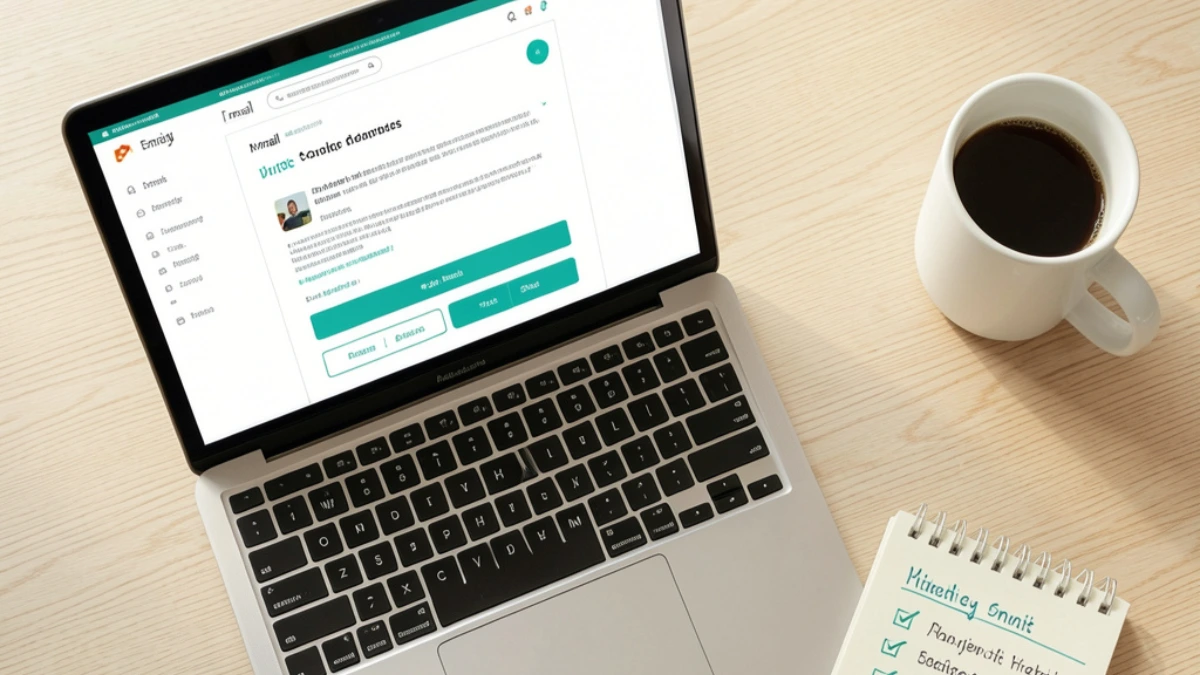
Here is what a simple, functional growth funnel looks like in practice - and what you need to have in place for each stage.
Stage one - the lead magnet. Create something genuinely useful for your ideal client. A short guide, a checklist, a mini training, a resource that solves a real problem. Keep it focused. One problem, one solution.
Stage two - the landing page. A single page where someone can read what the freebie is, understand why they need it, and enter their email to get it. No navigation menu. No distractions. One action only.
Stage three - the delivery and welcome sequence. As soon as someone opts in, they should receive the freebie automatically, followed by a short sequence of emails that introduces who you are, what you do, and how you can help them further. This sequence does the warming up so you do not have to do it manually every time.
Stage four - the conversion point. At some point in your follow-up sequence, or in your ongoing email communication, you make an offer. A call, a trial, a membership, a programme. This is where the funnel converts.
The key is that all four of these stages need to be connected. When someone opts in, the delivery triggers automatically. When the delivery goes out, the welcome sequence starts automatically. When the sequence ends, the right people are warm enough to take the next step.
If you are using a client onboarding process that is not automated, the time you spend manually onboarding every new lead is time you are not spending on anything else. Automating even the first part of that - the opt-in, the delivery, the welcome - frees up more time than most people expect.
Building Your Funnel Inside One Platform
The simplest way to build a growth funnel without the tech chaos is to build the whole thing inside one platform - one place where your landing pages, your email sequences, your CRM, your automations, and your follow-up all live together and connect automatically.
ESC Hub was built specifically for coaches and solopreneurs who are done managing five different tools and getting half the results. Inside ESC Hub, the whole funnel - lead magnet landing page, automated delivery, welcome sequence, follow-up emails, contact management - runs inside one account. When someone opts in, everything that follows happens automatically. No manual stitching. No broken integrations. No wondering whether the email actually went out.
The support is there too. Not a help doc. Not a ticket queue. A real team that works with online business owners every day and actually picks up when something is not working.
If your funnel has been sitting half-built because the tech keeps getting in the way, that is the problem ESC Hub solves.
Start your free 14-day ESC Hub trial at eschub.com.
Find this useful? Click the Image below to save it for later.