All-in-One vs Best-in-Class Tools: Which Should You Choose?
You have probably come across the argument. Some tools do one thing exceptionally well, and stringing together the best tool for each job gives you a more powerful setup than any single platform can match. It sounds logical. For certain businesses, it is.
But there is a part of this debate that does not get talked about enough: the best-in-class argument was built for a specific type of business, and that business probably is not yours.
Here is the short answer if you are weighing an all-in-one platform against multiple tools. An all-in-one platform runs your email, CRM, landing pages, bookings, payments, automations and community from one login. A best-in-class or multi-tool stack means paying for and connecting several separate apps that each do one job. One gives you fewer moving parts. The other gives you more control over each individual piece. Which one fits depends less on features and more on how much of your week you can afford to lose to admin.
What Best-in-Class Actually Means
Best-in-class is the idea that for every business function (email marketing, CRM, project management, analytics) there is one tool that does it better than anything else. Instead of settling for a platform that does everything adequately, you pick the best tool for each job and connect them together.
In practice it looks like this: Mailchimp or ActiveCampaign for email. HubSpot or Salesforce for CRM. Leadpages or ClickFunnels for funnels. Calendly for bookings. Kajabi or Teachable for courses. Each one does what it says on the tin. The question is what happens when you try to run a business across all of them at once.
For most coaches, a multi-tool stack is not even a deliberate strategy. It happens by accident. You pick a good email provider. Then a separate scheduler. Then a landing page builder. Then Zapier to hold the whole thing together with tape. Each tool is fine on its own. The problem is the gaps between them.
Who the Best-in-Class Argument Was Built For

The best-in-class approach made sense in a specific context: mid-sized and large businesses with dedicated teams. A marketing team running email campaigns. A sales team working the CRM. A technical team managing integrations and troubleshooting when something breaks.
In that setup, using the best tool for each function makes sense, because there are people whose whole job is to run each one. The integration overhead is manageable because someone owns it.
That is not the situation a solopreneur or online coach is in. You are the marketing team, the sales team and the technical team. Every tool you add is another platform you own, manage, troubleshoot and pay for. The logic that works for a 50-person company breaks down fast when it is one person wearing every hat.
What All-in-One Software Actually Means
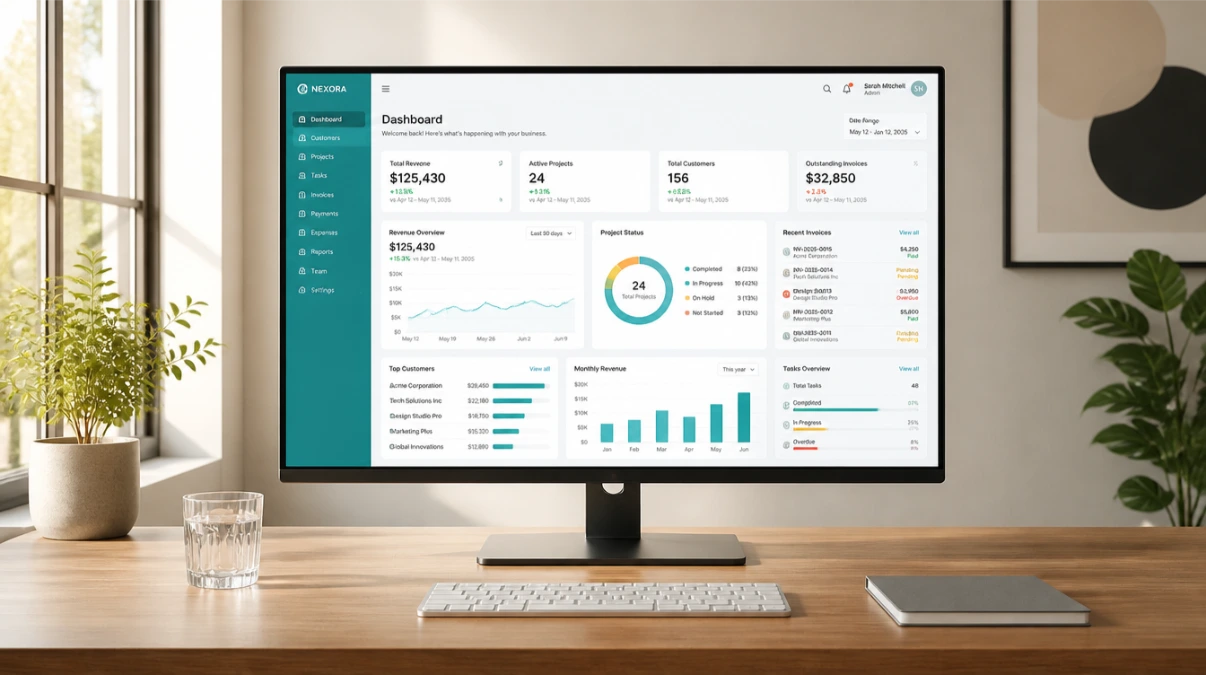
If you are new to the idea, this guide to all-in-one software for small businesses covers it in full. The short version: one platform handles your email, CRM, funnels, bookings, courses, payments and automations, all connected by default, with one login and one monthly cost.
The trade-off compared to best-in-class is real. A specialist tool will often do its one job a little better than the same module inside an all-in-one platform. The email builder may not be quite as advanced as a dedicated email platform. The funnel builder may not have every feature a standalone tool offers.
For most solopreneurs, that trade-off does not matter, because you were never going to use the advanced features of six specialist tools anyway. What matters is that everything works together without you having to make it work together.
Where the Best-in-Class Argument Breaks Down for Solopreneurs
You pay for features you do not use
Specialist tools are built for power users who need every feature in the platform. An email marketing tool built for enterprise teams will have advanced segmentation, A/B testing workflows, predictive send times and reporting dashboards a dedicated analyst would spend hours inside. You pay for all of that whether you use it or not.
Most solopreneurs use three or four features in each platform. The basic email sequence. The simple landing page. The standard booking link. The rest sits unused, but it is still built into the pricing tier you need for the one thing you wanted.
With an all-in-one platform, you pay for breadth rather than depth. That is a different trade-off, and for a solo business, it is usually the right one.
Your tools do not talk to each other properly
Best-in-class tools connect through integrations: Zapier, native connectors, webhooks. In theory, a lead comes in through your funnel, lands in your CRM, starts an email sequence and books a call. In practice, that chain has four points of failure instead of one.
An update rolls out on one platform and breaks the connection to another. A contact completes a purchase but the tag does not fire, so the onboarding sequence never starts. A new client books a call but the confirmation goes to the wrong address because the integration pulled from the wrong field. You find out when the client messages you asking what is going on.
This is not just a small business problem. In Zapier's survey of enterprise leaders, 76% said they had experienced at least one negative outcome because of disconnected AI tools. If big companies with IT teams struggle with it, a one-person business feels it even more.
Fixing it means logging into three or four platforms to work out where the chain broke. That is not an occasional inconvenience. It is a predictable, recurring cost of running a fragmented stack, and it always seems to happen on the day you have the least time for it.
You become the IT department
In a business with a technical team, integration issues get escalated. Someone owns the stack, monitors the connections and fixes things when they break. That person's salary is built into the cost of running a best-in-class setup at scale.
In a solo business, that person is you. Every broken Zap, every failed sync, every "why didn't that email send" investigation lands on your desk. It does not matter that you never signed up to be a systems engineer. When you are running five separate platforms, the systems work comes with the territory.
You lose hours to switching between apps
The time cost is easy to underestimate because it never shows up on an invoice. A Harvard Business Review study of teams at three Fortune 500 companies found workers toggled between apps and websites nearly 1,200 times a day, and spent just under four hours a week getting their bearings again after each switch. That is around 9% of their working time.
If you tracked the time you spend each month switching tools, troubleshooting integrations, chasing data that did not sync and rebuilding connections that broke, and put an hourly rate on it, the number would surprise you. That is the integration tax, and it grows every time you add another tool to the stack.
The Integration Tax: What It Really Costs to Run Specialist Tools

There is a cost to running specialist tools that most people do not account for when comparing options. Call it the integration tax.
It includes the direct costs: Zapier or Make subscriptions to connect your tools, higher plan tiers to get the API access you need, and the same data stored in several platforms. And it includes the indirect costs: the time spent setting up integrations, the time spent fixing them when they break, and the mental overhead of managing five platforms instead of one.
Look at your card statement and add up the software. That number stings, but it is not the real cost. When a new person books a call, does their name land in your email list automatically? When someone buys, do they get access without you doing anything by hand? If the answer is "sort of, when the integration doesn't break," you already know the tax you are paying. And there is the cost of things falling through the cracks: a lead who never got the follow-up, a client who booked but never got the reminder. That money never shows up as leaving, because it never arrived.
When you add up the direct costs alone, the numbers are often surprising. This look at the real cost of business software for solopreneurs has the full breakdown.
The integration tax is why businesses that start with a best-in-class stack often end up consolidating later anyway, after spending months and real money building connections between tools that should have been connected from the start.
All-in-One vs Multiple Tools: Where Each One Wins
Let's be fair to both sides, because this is not a one-way argument.
When multiple tools make sense
If you have dedicated people for each function (a marketing specialist, a salesperson, a technical resource), best-in-class gives you more powerful individual tools and is worth considering.
The same goes if one part of your business is highly specialised. Some people need advanced email deliverability features that only a focused provider offers. If email is the engine of your whole business, read why the best email marketing platform for coaches is not always the one with the most features before you assume more is better.
A multi-tool setup also gives you flexibility. Do not like your scheduler? Swap it without touching anything else. The catch is that flexibility comes with an upkeep bill: every tool needs its own login, its own updates and its own support ticket when something breaks.
When an all-in-one platform makes sense
If you are a coach or solopreneur running the whole show yourself, fewer moving parts usually wins. When your booking, email, payment and follow-up all live in one system, the connections are not integrations you built. They already work because it is one platform. If you have ever wrestled with a fragile Zapier chain, you will see why building a growth funnel without the tech chaos is easier when the pieces are already joined.

Which One Is Right for Your Business?
The honest answer is that it depends on one thing: whether you have a team to manage the complexity. Skip the feature lists and ask yourself four plain questions.
- How many hours a week do you lose to admin, connecting tools and fixing things that broke? If it is more than a couple, the stack is costing you.
- How often does something fall through the cracks, like a missed follow-up or a lead who went cold? Gaps between tools are usually the reason.
- When something breaks, who fixes it? If it is you, at 9pm, that is a real cost even though it is not on any invoice.
- Do you actually enjoy managing software? If not, every tool you add is friction, not freedom.
If you are running your business yourself, or with a small team where everyone does everything, the integration tax of a best-in-class stack will cost you more than the feature limits of an all-in-one platform. The question is not which approach produces the best software in every category. It is which approach lets you run your business without the tools becoming the job.
For solopreneurs and online coaches, all-in-one wins. Not because it is the most advanced option, but because it is the right fit: one platform built for how you work, with everything connected from day one and one team to call when something goes wrong.
Is switching to one platform a huge hassle?
This is the fear that keeps people stuck. You have spent years learning your current tools, and moving everything sounds like a month of pain for an uncertain payoff.
Honest answer: moving does take effort. You export contacts, rebuild a few key pages and reconnect your payment processor. It is a weekend or two of focused work, not a random Tuesday afternoon. But compare that one-time effort to the ongoing tax of the stack you have now. The switch ends. The daily tool juggling does not.
You also do not have to abandon a tool that is genuinely working. Sometimes the smart call is deciding when to switch from free to paid tools, and applying the same judgement to whether each specialist app earns its place. If you are weighing up the move, this guide on how to switch platforms without losing data walks through what to expect.
Where ESC Hub Fits
Once you have decided fewer moving parts is the goal, the next question is which platform to trust with the whole thing.
ESC Hub replaces up to 20 separate tools. Email, CRM, landing pages, bookings, checkout, courses, automations and community all run from one login, for $97 a month including 20,000 emails, then $1 per 1,000 after that. No integration tax. No juggling five platforms.
But the feature list is not the point. Plenty of platforms can list the same features. What decides whether an all-in-one platform works for you is whether you get stuck. Most people do not leave a platform because it cannot do something. They leave because they could not figure out how, and nobody helped.
That is where ESC Hub is different. You get training and support to set things up, daily coaching calls and 24/7 live chat. When you are building your first automation or moving your list across, there are real people who walk you through it and stay with you until it works. We are a people-first, female-led team, and we genuinely care whether it works for you. Anyone can build a booking calendar. Very few will sit with you while you build yours.
Frequently Asked Questions
Is an all-in-one platform cheaper than multiple tools?
Usually, yes, once you add up every subscription in your stack plus the connectors holding them together. One platform is one bill, and it often comes in well below the combined total of five or six specialist tools.
Do all-in-one platforms do each job as well as a specialist tool?
Sometimes a dedicated tool is ahead on one specific feature. For most coaches and solopreneurs, an all-in-one covers each job well enough that the time saved by having everything connected outweighs the small gap.
Will I lose my data if I switch platforms?
Not if you plan it. You export your contacts and content from your current tools and import them into the new one. It takes some setup time, so keep your old tools running until you have checked everything has come across.
What is the biggest downside of running multiple tools?
The gaps between them. Integrations break, follow-ups do not fire, and you become the person responsible for fixing it all. That ongoing maintenance is the hidden cost most people underestimate.
How do I know if I have outgrown my current stack?
If you are losing hours a week to admin, dreading tech tasks or watching leads slip through the cracks between tools, you have outgrown it. The stack was fine when you were smaller. It stops working as you grow.
Try ESC Hub Free for 14 Days
ESC Hub is an all-in-one business platform built for online coaches and solopreneurs: CRM, email, funnels, bookings, courses, payments and automations in one place, with one team behind you from day one.