Group Funnels Explained: Do You Actually Need One?
If you have been in online business circles for any length of time, you have probably heard someone mention group funnels. Maybe it came up in a Facebook group, a coaching call, or a YouTube rabbit hole at 11pm. And now you are wondering whether it is a strategy, a tool, something you already have, or something being sold to you.
The answer is: all of the above, depending on who is talking.
In this post we'll dive into Here is what is actually going on.
What Is a Group Funnel?
A group funnel is a lead generation system that captures contact details from people joining or engaging with an online community - most commonly a Facebook group - and then follows up with them automatically.
That is it. No jargon required.
Someone joins your group. They answer a membership question that includes an opt-in. Their details get passed into your email system. An automated sequence starts. You go from having a community member to having a lead in your pipeline - without manually copying emails into a spreadsheet.
The term "group funnel" has also become attached to a category of dedicated tools built specifically for this Facebook group integration. You may have come across these. They do work - for a specific setup. More on that shortly.
But the strategy itself - capturing leads from a group and nurturing them automatically - is not new, and it does not require specialist software if your existing tools are set up to talk to each other.

How Group Funnels Typically Work
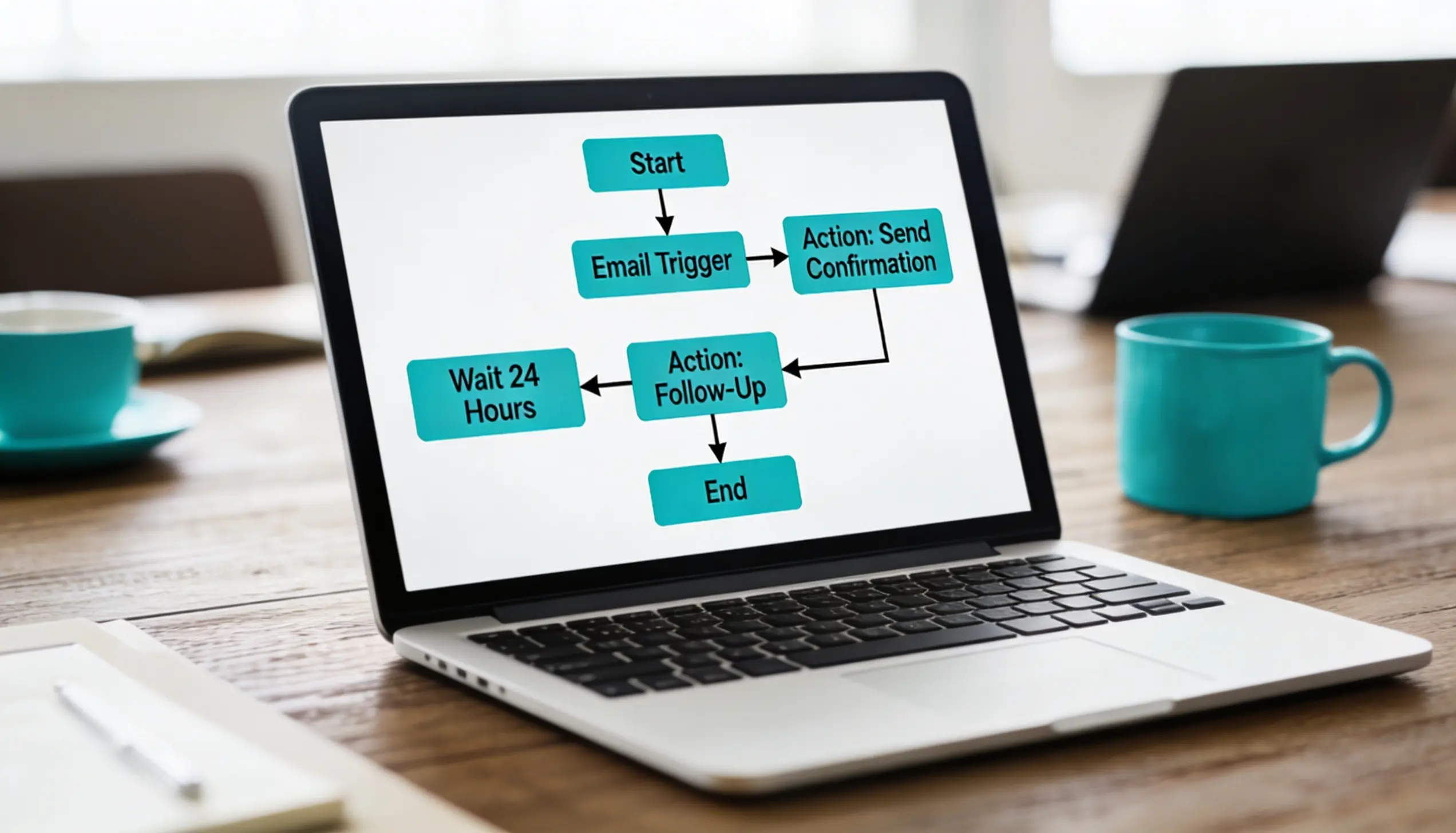
The basic flow looks like this:
Someone requests to join your Facebook group - you can set up to three join questions using Facebook's membership question feature, including an opt-in checkbox for your email list
When they join, their email gets captured - either manually, via a Zapier-style connection, or through a dedicated tool
That email lands in your CRM or email marketing platform
An automated welcome sequence fires
You start building the relationship
That is the foundation. From there, the sequence can be as simple as a three-email welcome series or as developed as a full webinar funnel that moves leads from community member to booked call.
The version most coaches are sold on involves a dedicated tool that sits between Facebook and their email platform, automates the capture, and sometimes sends a direct message to new members as well. It works. But it also adds a monthly cost, another login, and another integration to maintain - which is relevant when you are already running a business on multiple platforms.
These dedicated tools add a monthly cost on top of whatever you are already paying for your email platform and CRM. For coaches already running a fragmented tech stack, that is one more subscription solving a problem that a better-connected setup would handle automatically.
The capture mechanic itself is not complicated. What makes it feel complicated is when the tools involved do not talk to each other - so you end up adding a specialist tool to bridge a gap that should not exist in the first place.
Instagram Funnels and Coaching Funnels - Same Idea, Different Entry Point
Instagram funnels follow the same logic. Someone engages with your content - replies to a story, comments on a post, sends a DM. They are warm. The funnel is the system you use to move them from that moment of interest into your email list and then toward a sale.
For coaches specifically, the entry points vary - a free resource, a quiz, a discovery call booking page - but the mechanics are identical: capture the contact, trigger an automated sequence, move them toward a clear next step.
What changes between a group funnel, an Instagram funnel, and a coaching funnel that runs across your whole business is not the structure. It is the source of the lead.
This matters because coaches often end up running three different systems for three different entry points when one connected setup would handle all of them. That is where the complexity comes from - not from funnels being complicated, but from tools not being joined up.
Where Most Coaches Go Wrong With Group Funnels
The most common mistake is adding a tool to solve a connection problem.
You have a Facebook group. You have an email platform. They do not talk to each other. Someone tells you about a dedicated group funnel tool. You add it. Now they talk - but you also have another subscription, another integration, and another platform to learn.
Six months later, something breaks. The integration stops syncing. Emails stop going out. You spend a weekend troubleshooting instead of serving clients.
The tool was not the problem. The fragmented setup was.
The second mistake is building the capture without building the follow-up. A lot of coaches get obsessed with the opt-in and then send one welcome email before the sequence goes quiet. The group funnel becomes a list-building exercise with no momentum behind it.
A group funnel is only as good as what happens after the opt-in. If your client onboarding process and follow-up sequences are not connected to your lead capture, you are collecting contacts you are not converting.
What You Actually Need to Run One
For most coaches, the answer is: not a specialist group funnel tool. What you need is a system where the capture, the CRM, and the automated sequence already work together - and your Facebook group becomes one more entry point into that system, not a separate project requiring separate software.
If your existing tools are connected, you already have a group funnel. If they are not, adding another tool to bridge the gap is the wrong solution to the right problem.
Strip it back to the essentials.
A way to capture the email. This is either a join question in your Facebook group that includes an opt-in, a landing page linked from your group description or pinned post, or a DM opt-in on Instagram. The key is that the capture happens without you manually doing anything - someone says yes, their details move into your system automatically.
A CRM or contact database where that email lands and is tagged correctly. The tag is what triggers everything that comes next. If a contact lands without a tag, or lands in the wrong place, your automation either does not fire or fires for the wrong people. Getting the tagging right from day one saves a lot of troubleshooting later.
An automated email sequence that fires when the tag is applied. At minimum: a welcome email, one or two value emails, and a clear next step. The sequence does not need to be long. It needs to be relevant, timely, and connected to why the person joined your group in the first place.
An opt-in page if you are offering something in exchange for the email. A free guide, a checklist, a short training - whatever you are using to give people a reason to hand over their details. One headline, a short description of what they are getting, and a form. That is all it needs to be.
That is the whole system. Four components. They need to be connected. They do not each need to be a different tool.
How ESC Hub Handles This Without the Extra Tool
ESC Hub is built around exactly this kind of setup - not as a group funnel specialist, but as the platform where all of these components live together.
Your landing pages, your CRM, your email sequences, your automations, and your follow-up workflows are all in one place. When a lead comes in - from a Facebook group, an Instagram DM, a link in your bio, a podcast - they land in the same system. The same automation fires. The same sequence runs. You are not maintaining separate tools for separate entry points.
For coaches who have been running a group funnel tool alongside an email platform alongside a CRM, the shift to ESC Hub typically means replacing five, six, sometimes ten or more separate subscriptions with one - and for most, the monthly cost of ESC Hub is lower than what they were already paying across those tools combined.
That functionality - the capture, the tagging, the automated sequence - is handled inside the platform without a third-party integration sitting in the middle.
ESC Hub was built for solopreneurs and coaches who need everything connected and do not have a tech team to keep it connected. The support team works with members daily to set up exactly these kinds of systems - so you are not figuring out the automation logic on your own.
Most coaches put this off because the setup feels like another project on an already long list. It does not have to be. If you are currently running a group funnel through a patchwork of tools, or you have been meaning to set one up but kept putting it off because the setup felt complicated, ESC Hub is worth a proper look.
Start your free 14-day ESC Hub trial at eschub.com.
Save this post for later - click the image below!