Funnels for Coaches: Which Type You Actually Need (and How to Build One Without Tech Stress)
If you have been in business for a while and you still are not seeing consistent clients come through, the problem is probably not your offer. It is not your niche either, or the price point. Most of the time, the problem is the gap between someone discovering you and actually booking or buying. That gap is what a funnel closes.
A funnel for coaches is simply the path a potential client takes from first hearing about you to becoming a paying client. It does not need to be complicated. It does not need 14 steps or a stack of disconnected tools you have to duct-tape together every week. It needs to be clear, consistent, and working even when you are not.
This post covers the main funnel types used in coaching businesses, how to choose the right one for where you are right now, and what to do if your current setup is not converting.
Why Most Coaching Funnels Do Not Convert

Before looking at funnel types, it is worth naming the most common reason coaching funnels fail. It is not strategy. It is friction.
Most coaches are running three or four disconnected tools - a landing page builder in one place, email in another, bookings somewhere else, payments through a different system. Every handoff between tools is a place where a lead can fall through. A follow-up email that does not trigger. A booking link that does not connect to the confirmation. A lead magnet that delivers but then goes silent.
When the system is fragmented, the follow-up breaks down. And in coaching, follow-up is where almost all conversions happen. Very few people book or buy on the first touchpoint. The coaches who convert consistently are the ones with a follow-up sequence that keeps running after the initial opt-in, regardless of whether the coach is online that day.
If you recognize this, the fix is not a new strategy. It is a connected system. We will come back to that at the end.
The Main Funnels for Coaches
There is no single best funnel. The right one depends on your offer, your price point, and how you prefer to sell. Here are the four most common coaching funnels, what they are suited for, and where they tend to break down.
The Lead Magnet Funnel
This is the most common starting point and the right one for most coaches. You offer something free - a guide, a checklist, a short training, a quiz - in exchange for an email address. The lead then enters an email sequence that builds trust, demonstrates your expertise, and moves them toward a discovery call or a low-ticket offer.
The lead magnet funnel works well because it does not require a big commitment from the prospect. It is low friction at the entry point. The conversion happens over time, through the follow-up sequence.
Where it breaks down: the lead magnet delivers and then nothing happens. No sequence. No follow-up. The lead goes cold before you have had a chance to show them what you do. The lead magnet funnel only works if the email sequence behind it is actually built and running.
This connects directly to how to automate your client onboarding process (eschub.com/post/client-onboarding-process) - the same principle applies. Automation is what keeps the experience consistent after the initial opt-in.
The Webinar Funnel
A webinar funnel works by inviting leads to a live or pre-recorded training session. The training delivers genuine value and ends with a pitch for a programme, a membership, or a discovery call. The registration page captures the lead. The confirmation and reminder sequence keeps them showing up. The post-webinar sequence follows up with everyone who did not convert during the webinar itself.
The webinar funnel tends to suit coaches with mid-to-high-ticket offers - group programmes, mastermind groups, or one-to-one packages at $1,000 or above. The format gives you time to build trust and address objections before the pitch lands.
Where it breaks down: logistics. Running webinars consistently is demanding if you are doing it live. The follow-up sequence after the webinar - to both attendees and no-shows - is often the piece that gets skipped, and that sequence is often where most of the revenue comes from.
The Evergreen Funnel
An evergreen funnel is a webinar funnel that runs without you. A recorded training goes out on a schedule, prospects watch it in their own time, and the follow-up sequence runs automatically. From the prospect's perspective it feels current. From your perspective, it is running whether you are working or not.
The evergreen funnel is the right choice for coaches who have already validated their offer and want to step back from the constant cycle of live launches. It is not a starting point - you need to know your offer converts before you build an evergreen version of the pitch.
Where it breaks down: the email sequence. An evergreen funnel depends entirely on a well-built automated follow-up. Without it, you are driving traffic to a recording and then going silent. This is where understanding business process automation for small businesses (eschub.com/post/business-process-automation-software-small-business) becomes directly relevant - evergreen funnels are essentially automation applied to your sales process.
The Tripwire Funnel
A tripwire funnel introduces a low-ticket offer - typically between $7 and $49 - immediately after an opt-in. The idea is that someone who buys from you once, even at a small price, is far more likely to buy again. The tripwire converts a new subscriber into a buyer straight away, which changes the relationship and funds part of your ad spend.
The tripwire funnel works best when the low-ticket product is genuinely useful and clearly related to the higher-ticket offer. It is not a watered-down version of your main programme. It solves a specific, contained problem. The main offer then becomes the obvious next step.
Where it breaks down: the sequence between the tripwire purchase and the core offer pitch. If there is no follow-up after someone buys the low-ticket product, the opportunity to convert them upward gets missed.
Choosing the Right Funnel for Where You Are Now
The question is not which funnel is best in theory. It is which one you will actually build and maintain.
If you are still finding your audience and building an email list, start with the lead magnet funnel. Get the opt-in working, build the follow-up sequence, and focus on growing your list before adding complexity.
If you have an audience and a validated offer but you are not converting consistently, the webinar funnel is worth testing. It gives you a structured way to move people from warm to ready-to-buy.
If your webinar or launch converts well and you want to remove yourself from the cycle, move it to evergreen. Build the automation and let it run.
The tripwire funnel works as an add-on to any of the above - not as a standalone strategy. Layer it in once the primary funnel is converting.
One thing that applies across all four: the best funnel builder for a solopreneur coach is not the most feature-heavy one. It is the one where everything is connected. Landing page, email sequence, booking system, payments - in the same place, talking to each other automatically. When you are comparing tools, that is the question to ask. Not 'does it have a funnel builder' but 'does the funnel actually connect to my email, my calendar, and my follow-up?'
This is exactly what we look at in the breakdown of website and funnel builders for coaches (eschub.com/post/website-funnel-builder-coaches) - worth reading if you are currently piecing things together across multiple platforms.
The Follow-Up Sequence: Where Coaching Funnels Win or Lose
Whatever funnel type you choose, the follow-up sequence is where the conversion actually happens for most coaching businesses.
Most leads do not convert on the first touchpoint. They need to see you show up consistently, understand what you do, and get enough trust in your approach before they are ready to book a call or make a purchase. That process takes time - usually five to ten touchpoints across email, social, or both.
A follow-up sequence does this automatically. Once someone opts in or registers or buys the tripwire, the sequence runs. You do not have to remember to email them. You do not have to manually follow up. The system keeps the relationship warm until they are ready to take the next step.
What goes in the sequence: the first few emails should deliver on the promise of the lead magnet and introduce you and your approach. Then, over the following days and weeks, alternate between useful content and direct invitations to take the next step - a discovery call, a training, a low-ticket offer. Keep it human. No one wants to read copy that sounds like a funnel.
The most important thing is that the sequence exists and is actually running. A broken trigger or an empty sequence is not a funnel. It is a list of people you have already impressed enough to opt in, now going cold.
What to Do If Your Current Funnel Is Not Working
If you have a funnel of some kind already and it is not converting, the problem is almost always one of three things.
First, the follow-up is missing or broken. Check whether your sequences are actually sending. This is more common than it sounds - a disconnected tool, a changed API key, an automation that stopped firing without anyone noticing.
Second, the message is off. Not wrong, just not landing with the person reading it. Go back to your opt-in copy and your first three emails. Is it speaking to where your reader actually is right now? Is it addressing the thing they are stuck on before you pitch the solution?
Third, the system is too fragmented to function reliably. If you are running your funnel across five platforms, something will break. Simplifying to one connected system will often fix the conversion problem without changing anything else.

Getting Your Funnel Running in One Place
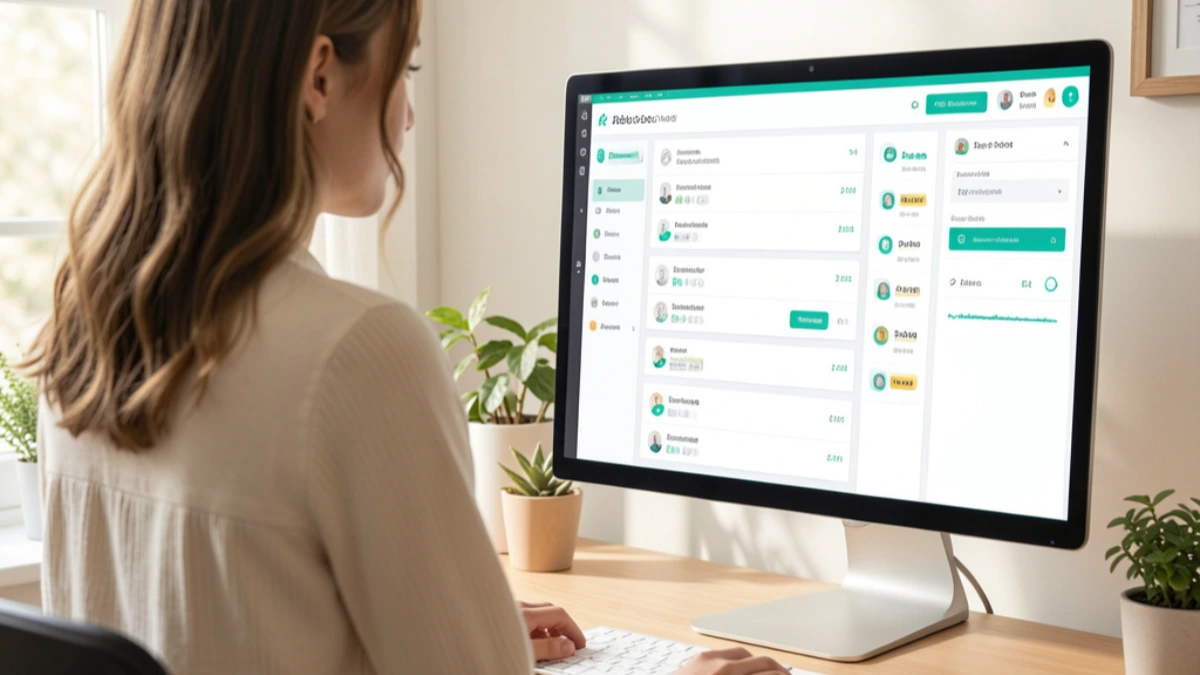
If your current setup is spread across multiple tools and things keep falling through the gaps, the practical fix is to consolidate. Landing pages, email sequences, booking, automations, and community in one place - with everything connected from the start.
That is what ESC Hub was built for. It is used by coaches and solopreneurs who are done juggling disconnected tools and want a system that actually holds together. The support team is available every weekday to help you get it set up and keep it running.
Start your free 14-day ESC Hub trial at eschub.com.
Find this useful? Click the Image below to save it for later.