ESC Hub vs HubSpot: Which One Is Right for Coaches
If you are comparing ESC Hub vs HubSpot, you are probably researching CRM options for your coaching or solopreneur business and HubSpot keeps coming up. It is one of the most recognised names in marketing and sales software. The free plan sounds like a good place to start. And then you look at what you actually need - email automation, landing pages, booking, a connected system - and the picture gets more complicated.
Before diving in - if you are still figuring out what CRM features actually matter for a coaching business, the best CRM for coaches and what to look for in a simple system covers the fundamentals first.
Two Platforms, Two Different Customers
HubSpot and ESC Hub both describe themselves as all-in-one platforms. That is where the similarity ends.
HubSpot was built for sales teams, marketing departments, and businesses with multiple users managing pipelines, campaigns, and customer service workflows simultaneously. Its product is structured around Hubs - Marketing Hub, Sales Hub, Service Hub, Content Hub - each sold separately or bundled, each with their own pricing tiers. The platform is powerful and deeply integrated. But it was designed around a team model, not a one-person business model.
ESC Hub was built for a different customer: the coach or solopreneur who needs her CRM, her email marketing, her booking system, her funnels, and her checkout connected in one place - without a pricing structure designed for a company with ten employees.
Who HubSpot Was Built For
HubSpot's origin is inbound marketing for B2B companies. The platform has expanded significantly since then, but its design reflects where it came from. The core user is a marketing or sales professional working inside a team - someone managing lead pipelines with multiple stages, running campaigns across channels, reporting to management on attribution and conversion rates, and coordinating with colleagues across sales, marketing, and service functions.
The language throughout HubSpot reflects this: seats, workflows, deal stages, sequences, pipeline views. These are the concepts of a sales organisation, not a solo coaching business. That is not a criticism of HubSpot. It is a design choice that made it one of the most powerful CRM platforms in the market. But it also means the platform was not built with a coach or solopreneur in mind.
What HubSpot Does Well
The free CRM is genuinely useful. Contact management, deal tracking, basic email, forms, and live chat are available at no cost - and the free plan is not artificially crippled. For a very early-stage business that needs basic contact records and simple follow-up, the free plan handles that job.
The depth of the platform at paid tiers is also real. For a team-based B2B business with the budget to match, HubSpot's integrations and reporting go deep.
Where HubSpot Falls Short for Coaches and Solopreneurs

Here is where the mismatch becomes a problem - and it comes down to one number: the gap between Starter and Professional.
HubSpot Marketing Hub Starter is $20 a month. It includes 1,000 marketing contacts, basic email marketing, and simple automation. For a solopreneur just getting started, it looks like an affordable entry point.
But the features a coaching business actually needs - full marketing automation, landing pages that convert, A/B testing, advanced workflows - are gated behind Marketing Hub Professional. That plan starts at $890 a month for 2,000 contacts, three seats, and a mandatory one-time onboarding fee of $3,000 that applies regardless of whether you use the onboarding service. That is a first-year cost of over $13,000 before you have added a single contact above the base limit.
If your email list grows beyond 2,000 contacts on Professional, HubSpot charges approximately $50 per additional 1,000 contacts. A list of 5,000 contacts adds roughly $150 a month to the bill - on top of the $890 base subscription.
The pricing cliff between $20 and $890 is the central problem with HubSpot for a solopreneur. The free and Starter plans are useful but limited. The plan that actually does what a coaching business needs costs the same as a small team's entire software budget.
Beyond pricing, HubSpot does not include a funnel builder, landing page builder, booking system, or course and membership delivery at any tier. Each of those requires either a separate HubSpot Hub - at additional cost - or a third-party tool. For a solopreneur trying to consolidate her tech stack rather than expand it, HubSpot creates the same tool-sprawl problem it was supposed to solve.
For a look at how business process automation tools compare for small online businesses - and where HubSpot's automation limitations start to show - that post covers the landscape in more detail.
Who ESC Hub Was Built For
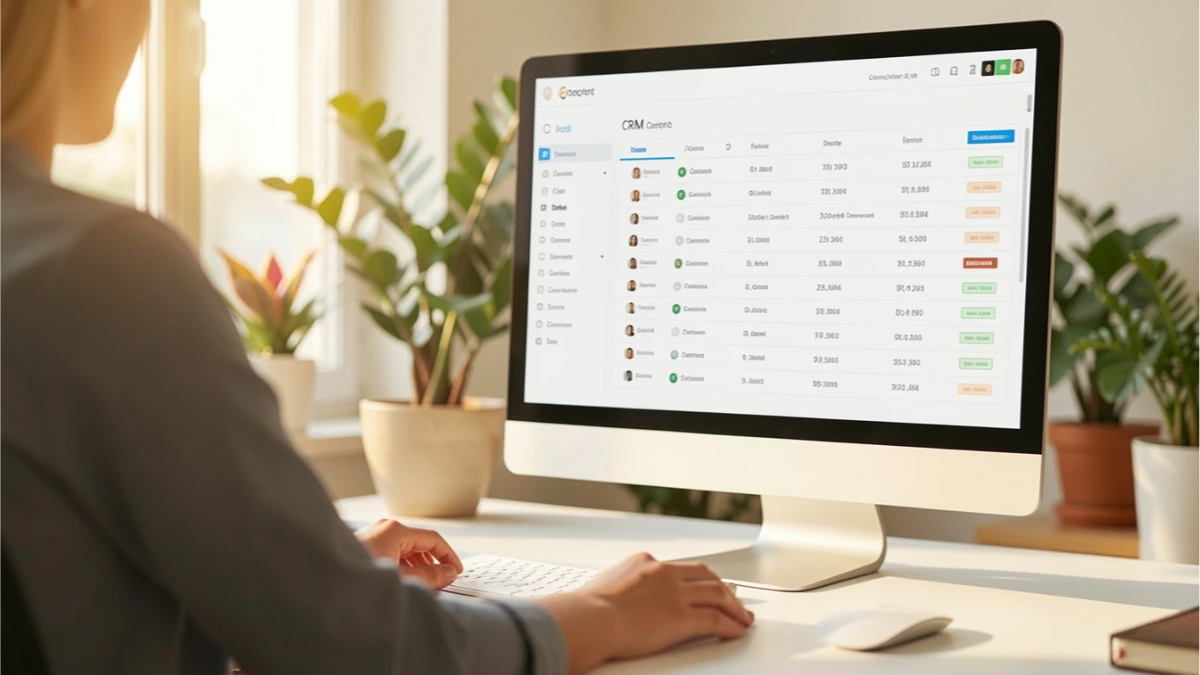
ESC Hub was built for coaches and solopreneurs who need a complete business system - not an enterprise CRM with a free tier designed to draw them toward a pricing structure they cannot justify.
The platform combines CRM and contact management, email marketing and automation, landing pages and funnels, booking and calendar pages, course and membership delivery, and checkout in one connected system. Everything a coaching business needs to run - from the first opt-in to the paid client - is inside one platform without requiring additional tools or Zapier connections.
The pricing is simple: $97 a month for the full platform. No Hub bundling. No seat-based pricing. No mandatory onboarding fee. No pricing cliff between the plan that looks affordable and the plan that actually does what you need.
For a coach who has looked at HubSpot's free plan and then discovered what Professional costs, the contrast is significant. ESC Hub's $97 a month includes the CRM, the email automation, the funnels, and the booking system that HubSpot either does not include at any price or gates behind an enterprise-level plan. For a practical comparison of what a funnel builder for coaches should actually include alongside a CRM, that post covers the full picture.
The Support Difference
HubSpot's support model scales with your plan. The free and Starter plans offer community and knowledge base access. Phone support requires Professional or above - the $890 a month plan. For a solopreneur on the free or Starter tier, meaningful support when something breaks means searching a help database or waiting on email.
ESC Hub operates differently. Daily live coaching calls run Monday to Friday, open to every member. There is a real team available when something is not working. For a coach whose booking system and email sequences need to function correctly on any given day, access to a real person - not a tier-gated support system - is a meaningful practical difference.
For most coaches, building on one platform from the start also means a lower monthly outlay than stitching together five separate subscriptions.
ESC Hub vs HubSpot: Which One Is Right for Your Business
If you are a sales-led B2B business with a team, a marketing budget, and the need for deep pipeline management and multi-channel campaign reporting - HubSpot at the Professional or Enterprise tier is a genuinely powerful tool built for that job.
If you are a coach or solopreneur who needs a CRM connected to your email sequences, your booking calendar, your funnels, and your checkout - without paying $890 a month for the plan that actually does what you need - HubSpot was not built for you.
ESC Hub was. At $97 a month, it replaces the full stack most coaches are trying to run across multiple platforms, with support included and no pricing cliff between the plan that looks affordable and the one that works.
Start your free 14-day ESC Hub trial at eschub.com
Find this useful? Click the Image below to save it for later.