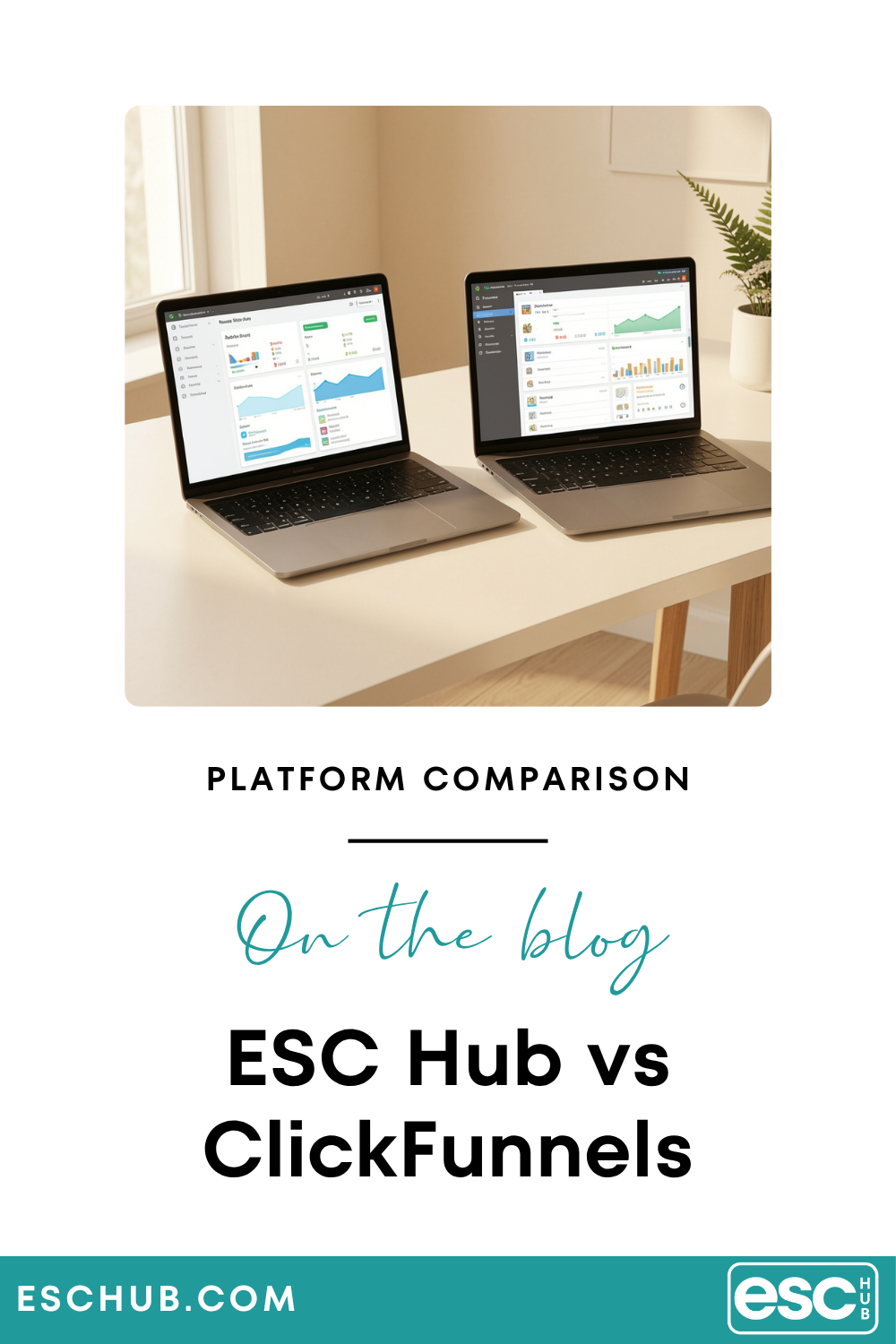
ESC Hub vs ClickFunnels: Which One Is Actually Built for Your Business
If you are comparing ESC Hub vs ClickFunnels, you are probably already past the point of wondering whether you need a funnel builder. You know you do. The question is which platform makes sense for the way you actually run your business.
This post gives you a straight answer. Not a feature table. Not a list of integrations. A clear picture of what each platform was designed to do, who it was built for, and where the difference matters most for a coach or solopreneur running a lean online business.
Before diving in - if you are still getting clear on what funnels do and which type your business actually needs, start there first. It will make this comparison easier to read.
Two Platforms, Two Different Jobs
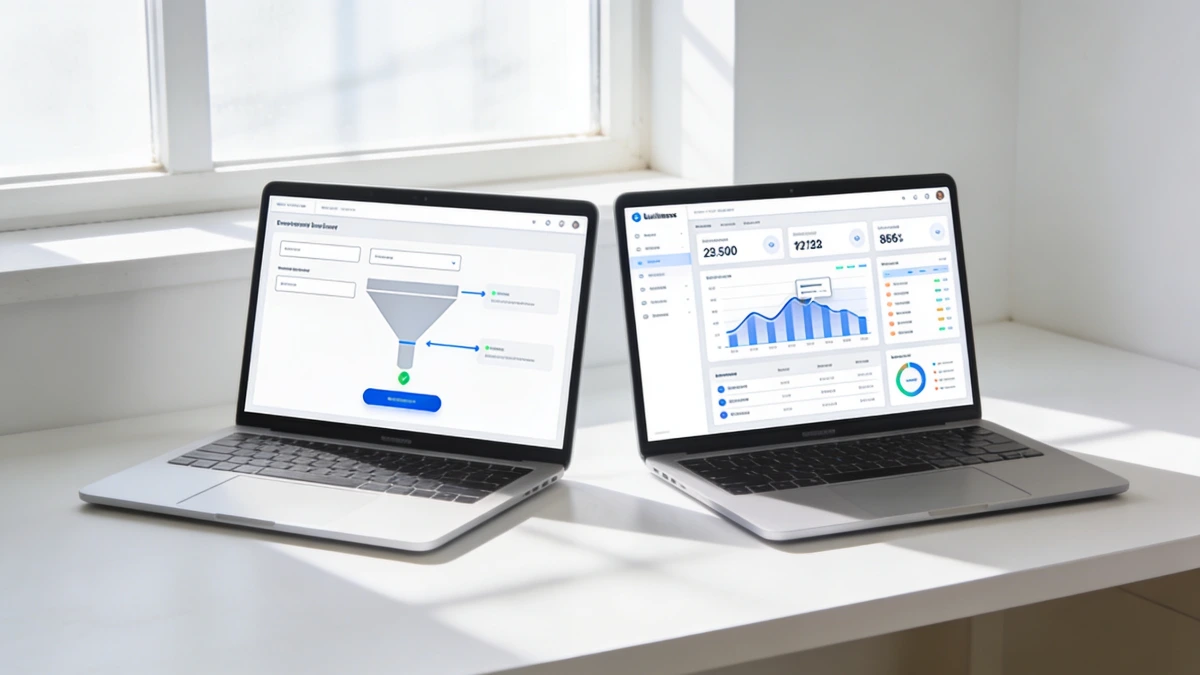
ClickFunnels and ESC Hub both build funnels. That is where the similarity ends.
ClickFunnels was built to do one job exceptionally well: create high-converting sales funnels for marketers running paid traffic at scale. It does that job well. But it was never designed to replace your email platform, your CRM, your booking system, or your client onboarding workflow. It is a funnel builder. The rest of your business stack sits around it.
ESC Hub was designed around a different question: what does a coach or solopreneur actually need to run their entire business in one place - without stitching five platforms together and troubleshooting integrations every time something breaks? The funnel builder is one feature inside a complete system. It sits alongside email marketing, CRM, booking pages, automations, and course delivery - all connected by default, all inside one login.
The decision between the two platforms comes down to what job you are hiring them to do.
Who ClickFunnels Was Built For
ClickFunnels was created for marketers running high-volume sales funnels - typically with paid ad traffic, upsell sequences, order bumps, and multiple offers running simultaneously. The platform is optimised for conversion at scale. If you are spending thousands a month on ads and driving cold traffic through a polished funnel sequence, ClickFunnels was designed with you in mind.
The brand built its reputation on a specific type of business: digital product launches, high-ticket sales funnels, affiliate marketing, and info-product creators with large audiences. The training ecosystem - FunnelFlix - reflects that world. Most of the templates, the case studies, and the strategy content inside ClickFunnels point toward a volume-based, paid-traffic business model.
That is not a flaw. It is a design decision. But it is worth naming clearly, because most coaches and solopreneurs are not running that kind of business.
What ClickFunnels Does Well
The funnel builder is genuinely strong. The drag-and-drop editor is intuitive, the templates are polished, and the checkout and upsell flow functionality is among the best in the category. If building a single high-converting funnel is the primary job - opt-in page, sales page, order form, thank-you page - ClickFunnels makes that process fast and straightforward.
For someone who needs to get a funnel live quickly and already has a separate email platform, CRM, and booking system in place, ClickFunnels delivers on the one thing it was built to do.
Where ClickFunnels Falls Short for Coaches and Solopreneurs
Here is where the mismatch becomes a problem.
ClickFunnels starts at $97 a month for the Launch plan. That plan comes with one workspace, basic funnel building, and contact limits that most growing businesses outgrow quickly. The Scale plan is $197 a month. Optimize is $297 a month. If you use your own Stripe account rather than ClickFunnels' native payment system, there is an additional 1% gateway fee on every sale.
But the pricing is only part of the picture. The bigger issue is what ClickFunnels does not include.
It does not include email marketing. You still need Mailchimp, ActiveCampaign, or another platform for that - and something to connect them. It does not include a CRM that tracks your contacts through the full client journey. It does not include a booking system. It does not include a course or membership platform. Each of those pieces needs to be sourced, paid for, and integrated separately.
For a coach running a lean online business, that means a $97 ClickFunnels plan quickly becomes part of a $200 to $300 monthly stack - with multiple logins, multiple support channels, and multiple points of failure when something breaks. And when something breaks between platforms, neither platform's support team is responsible for fixing the connection between them. That troubleshooting lands on you.
For more context on how the funnel builder fits into the broader picture of what a coaching business actually needs, choosing the right website and funnel builder as one connected system is worth reading alongside this comparison.
Who ESC Hub Was Built For
ESC Hub was built for coaches, solopreneurs, and online service providers who want one platform that runs their whole business - not a best-in-class funnel builder that requires four other tools to function.
The platform consolidates everything a lean online business needs: funnels and landing pages, email marketing and automations, CRM and contact management, booking and calendar pages, course and membership delivery, checkout and payment collection. All of it inside one platform. All of it connected without needing Zapier or third-party integrations to make it work.
The ideal ESC Hub client is not someone running $10,000 a month in paid ad spend through a polished funnel. It is someone who needs a complete, functional business system - one that lets them focus on coaching rather than managing a tech stack.
The Support Difference
This is the part of the comparison that does not show up in feature tables - and it is the part that matters most once you are actually inside a platform trying to make it work.
ClickFunnels support is ticket-based. Response times vary. For a platform at $97 to $297 a month, users report inconsistent experiences - particularly for technical issues that require back-and-forth troubleshooting.
ESC Hub operates differently. There are daily live coaching calls Monday to Friday, open to all members. There is a team available for support - not a ticket queue. When something is not working, you reach a real person who knows the platform and knows your business context. That difference is not a minor detail. For a coach who is not technical and whose income depends on her funnel and booking system working correctly, it is the whole reason to choose one platform over the other.
They came for the software. They stayed for the support. That is the pattern ESC Hub sees with nearly every client who joins.
ESC Hub vs ClickFunnels: Which One Is Right for Your Business
If you are a high-volume marketer running paid traffic, managing multiple simultaneous funnel sequences, and already have a full business stack in place - ClickFunnels does the funnel-building job well and you may not need what ESC Hub offers.
If you are a coach or solopreneur who needs a funnel, an email sequence, a booking system, a CRM, and a way to get paid - all working together, all in one place, with a team behind you when something goes wrong - ClickFunnels is one piece of a much larger puzzle you will need to assemble and pay for separately.
ESC Hub was built for that second person. At the same starting price point as ClickFunnels' Launch plan, it replaces the full stack most coaches are currently running across multiple platforms.
For a practical look at how the best funnel builder for coaches fits into a complete business system, that post covers the broader comparison in detail.
Start your free 14-day ESC Hub trial at eschub.com
Ready to Try it Out? Start Your 14 Day Free Trial