Deadline Funnels: Build Evergreen and Webinar Funnels
There’s a version of your coaching business that runs without you being present for every sale.
Someone finds you through a blog post or a social media share. They land on your page, register for your webinar or download your lead magnet, and enter a sequence that introduces your offer, creates genuine urgency, and moves them toward a buying decision - automatically, while you’re coaching your existing clients, sleeping, or doing something else entirely.
That’s what a deadline funnel, an evergreen funnel, or a webinar funnel is designed to do. And if you’re a solopreneur coach who’s been putting off building one because the tech feels complicated, this post cuts through that.
What a Deadline Funnel Actually Is
The term “deadline funnel” is used in two ways. The first refers to Deadline Funnel the tool - a specialist platform that adds personalised countdown timers to email sequences and sales pages. The second - and the one this post covers - refers to the strategy: a sales funnel built around a genuine, time-limited offer that creates real urgency for the person going through it.
The strategy is what matters. The tool is just one way to implement it.
A deadline funnel works on a simple principle: most people who are interested in an offer will delay making a decision unless there’s a compelling reason to act now. A countdown timer on its own is not a compelling reason - anyone who has seen a fake timer reset to 24 hours every time they visit a page knows this. Genuine urgency is. A real deadline, tied to a real consequence (the price goes up, the bonus disappears, the doors close), changes behavior in a way that fake scarcity never does.
The three funnel types that use deadline strategy most effectively are evergreen funnels, webinar funnels, and automated launch sequences. This post covers the first two in detail.
What an Evergreen Funnel Is - and Why Coaches Need One
An evergreen funnel is a fully automated sales sequence that runs continuously - generating leads, nurturing them, presenting an offer, and creating urgency - without you having to be present or launch a new campaign.
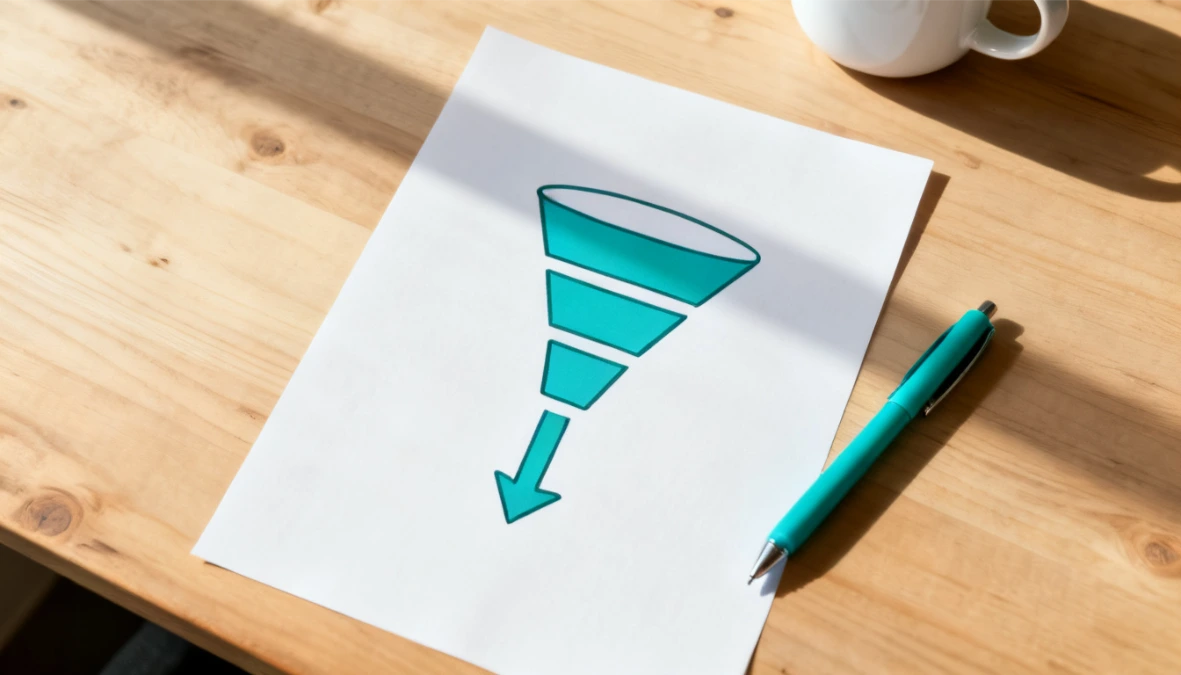
The “evergreen” part means the content doesn’t go stale. Your lead magnet, your email sequence, your sales page - they cover topics that stay relevant over time. Once built, the system keeps working in the background whether you’re actively promoting or not.
For a solopreneur coach, an evergreen funnel is one of the highest-value systems you can build. Here’s why:
You stop starting every month at zero. Instead of relying on launches or live promotion to generate sales, an evergreen funnel creates a consistent background revenue stream from everyone who enters your world at any point.
You can focus on delivery. When the sales process runs automatically, you spend your time coaching rather than selling. The funnel handles the conversion; you handle the client.
You build an asset. An evergreen funnel gets better over time as you refine the sequence, improve the offer, and optimise the conversion points. Unlike a single launch, it compounds.
A simple evergreen funnel for a coaching business looks like this: a lead magnet landing page, a welcome and nurture email sequence of five to seven emails, a sales email that introduces the offer with a genuine deadline, and a checkout page. When someone joins your list, the clock starts. When the deadline expires, the offer changes. That’s the whole structure.
What a Webinar Funnel Is - and When to Use One
A webinar funnel uses a free training as the lead magnet and conversion mechanism. Instead of a PDF or checklist at the top of the funnel, the lead registers for a webinar - live or pre-recorded - and the sales offer comes at or after the training.
Webinar funnels convert well for coaching and programme sales because the webinar itself does the education and trust-building work that would otherwise require multiple email touches. A well-structured 45-minute webinar can move a cold lead to a buying decision in a single session.
There are two formats:
Live webinars - you present in real time, answer questions, and make the offer at the end. The urgency is natural: the event only happens at that time, and any bonus or special pricing expires at the end of the live session. High conversion, high time investment.
Automated (evergreen) webinars - a pre-recorded webinar plays on a schedule or on demand. Registered attendees watch the recording, receive the same sequence as a live attendee, and get a time-limited offer after watching. Lower conversion than live, but it runs continuously without your involvement after the initial setup.
For most solopreneur coaches, an automated webinar funnel is the right starting point. You record the webinar once, build the funnel once, and the system runs. Live webinars are worth running periodically to refresh content and build relationship - but the automated version is what creates consistent background revenue.
The Six-Tool Stack Problem
Here’s what most guides on this topic won’t tell you: building a full deadline or webinar funnel with separate tools is expensive and fragile.

A typical solopreneur coaching funnel built with specialist tools looks like this: a landing page builder for registration pages, an email platform for sequences, a countdown timer tool for urgency, a webinar platform for hosting, a booking tool for post-webinar calls, and a checkout tool for payment. That’s potentially six separate subscriptions, six logins, and six places where a lead can fall through a gap.
The cost adds up fast. Deadline Funnel alone starts at $49/month. A webinar platform starts at $49-99/month. An email platform, a landing page builder, and a CRM on top of that - you can easily reach $300-400/month before you have launched a single campaign.
More importantly, every connection between those tools is a point of failure. A Zapier integration that stops firing. A form that doesn’t pass the contact to the email platform correctly. A countdown timer that doesn’t sync with the offer on the sales page. Each gap is a lead lost.
The simplest version of a deadline or evergreen funnel is one where the landing page, email sequence, automation, countdown trigger, and checkout all live in the same platform. When they connect natively, the funnel runs as designed - without you managing the joins between tools. For a broader look at what an all-in-one platform covers and how to evaluate one before committing, the guide to all-in-one software for small businesses is worth reading first.
How to Build a Simple Evergreen Funnel
You don’t need a complicated setup to start. Here’s a practical structure that works for a coaching business:
Step 1: Choose one lead magnet. A specific, valuable resource that solves one problem your ideal client has. A checklist, a short guide, a mini training, a template. The more specific the problem it solves, the better the conversion rate on the landing page.
Step 2: Build a landing page with one offer and one form. No navigation links. No competing CTAs. One thing to do: submit the form and get the resource.
Step 3: Write a five to seven email nurture sequence. Email 1 delivers the lead magnet and introduces you. Emails 2-4 add value, address objections, and build the case for your offer. Email 5 introduces the offer with a deadline. Email 6 is a reminder. Email 7 is a final notice. The deadline is real - when it expires, something changes.
Step 4: Set the automation trigger. When someone submits the form, the sequence starts and the clock begins. When the deadline passes, the offer either changes price, removes a bonus, or closes.
Step 5: Connect booking and payment. The CTA in the sales emails should go to a clear next step - a booking page for a discovery call, or a checkout page for a direct purchase. When someone books or buys, the sequence stops automatically.
That’s a complete evergreen funnel. It can be built in a few days and it runs indefinitely once it’s in place. For a detailed breakdown of how to set up the email sequence and automation side of this, the guide to automating follow-up emails covers the mechanics in depth.
How to Build a Simple Webinar Funnel
The webinar funnel adds one step to the evergreen structure: the lead registers for a webinar rather than downloading a lead magnet, and the sales offer comes during or after the webinar rather than through email alone.
Step 1: Record a 30-45 minute training. Cover one transformation relevant to your offer. The training should deliver genuine value and naturally position your paid programme as the logical next step. A webinar that over-delivers on the free content converts better than one that holds back.
Step 2: Build a registration page. What will they learn? Who is it for? When does it start? Clean, specific, one form.
Step 3: Set up the confirmation and reminder sequence. A confirmation email immediately after registration, a reminder the day before, and a reminder one hour before (for live). For automated webinars, the “now watching” email fires when they click to watch.
Step 4: Make the offer at the end of the webinar. A time-limited special - a bonus, a price, access to something - that’s only available for a defined period after watching. The deadline is stated clearly in the webinar and reinforced by the post-webinar email sequence.
Step 5: Run a three to five email post-webinar sequence. Replay link, testimonials, FAQ answers, urgency reminders, and a final deadline email. The sequence stops when someone buys or when the deadline passes.
The webinar funnel is more involved to build than a simple evergreen funnel - but a well-converting webinar funnel is one of the most effective sales systems available to a solopreneur coach. A 45-minute training that answers the right objections and makes a genuine offer will outperform a purely email-based funnel for higher-ticket programmes.
Getting your client onboarding process right from the moment someone buys through a webinar funnel is the final piece - what happens after the conversion determines whether you keep the client. ## ESC Hub - Build the Whole Funnel in One Place
Everything covered in this guide - the landing page, the email sequence, the automation trigger, the countdown, the booking step, the checkout - lives natively inside ESC Hub. You are not connecting six tools. You build the funnel once, inside one platform, and it runs.
ESC Hub was built for solopreneur coaches who need the whole system connected, not a stack of specialist tools that need managing separately. It replaces up to 20 platforms in one place at $97/month - and includes a support team and daily coaching calls to help you get it built and keep it running.
Compared to the $300-400/month six-tool stack described above, the maths are straightforward.
The funnels that work best are not the most complicated ones. They are the ones that are actually built - and the ones where every step connects cleanly to the next, without gaps where leads can disappear.
Start your free 14-day ESC Hub trial at eschub.com
Find this useful? Click the Image below to save it for later.