Best Time of Day for Email Marketing: What Actually Works
If you have ever stared at your email scheduler wondering whether 9am or 11am is going to make the difference - you are not alone. The best time of day for email marketing is one of the most searched questions in the space. And the answer is more useful than most articles make it.
Yes, timing matters. A small amount. But the variable most people are obsessing over is also the one with the smallest effect size. Before you rearrange your entire sending schedule based on a bar chart from a platform that studied 10 billion sends across industries you do not work in, it is worth understanding what timing actually controls - and what it does not.
Does send time actually affect your open rates?

It does - but less than you think, and the effect varies more than any benchmark study can predict.
The research shows that emails sent in the mid-morning window on weekdays tend to get higher open rates than emails sent late at night or on weekends. That part holds up. What does not hold up is the idea that Tuesday at 10am is universally optimal for every list, every offer, and every type of email.
Open rate is influenced by dozens of factors: your subject line, your sender name, how recently someone joined your list, how often you email them, what they last received from you, and whether they have been opening your emails at all. Timing sits somewhere in that list - but it is not at the top.
The most useful way to think about it: timing determines whether your email lands when someone is in their inbox. Everything else determines whether they open it.
What the data says - and why it only tells part of the story
Most email platforms publish send-time data based on their entire user base. That means a solopreneur emailing 400 coaches and consultants is being compared to an e-commerce brand emailing 400,000 shoppers, a B2B software company emailing procurement managers, and a media outlet emailing daily news readers.
The overlap in behaviour between those audiences is limited. Their schedules, devices, and inbox habits are different.
What the data does reliably show:
Mid-morning on weekdays (roughly 9am to 11am in the subscriber's time zone) tends to outperform evening sends
Tuesday, Wednesday, and Thursday show stronger open rates than Monday or Friday for most business-focused lists
Weekends underperform for B2B-adjacent audiences but can work well for lifestyle content and personal newsletters
For a small business owner with a list of women running online businesses from home - which is the core ESC Hub audience - mid-morning on a weekday is a reasonable starting point. But the only send time that is truly optimal for your list is the one you discover by testing against your own data.
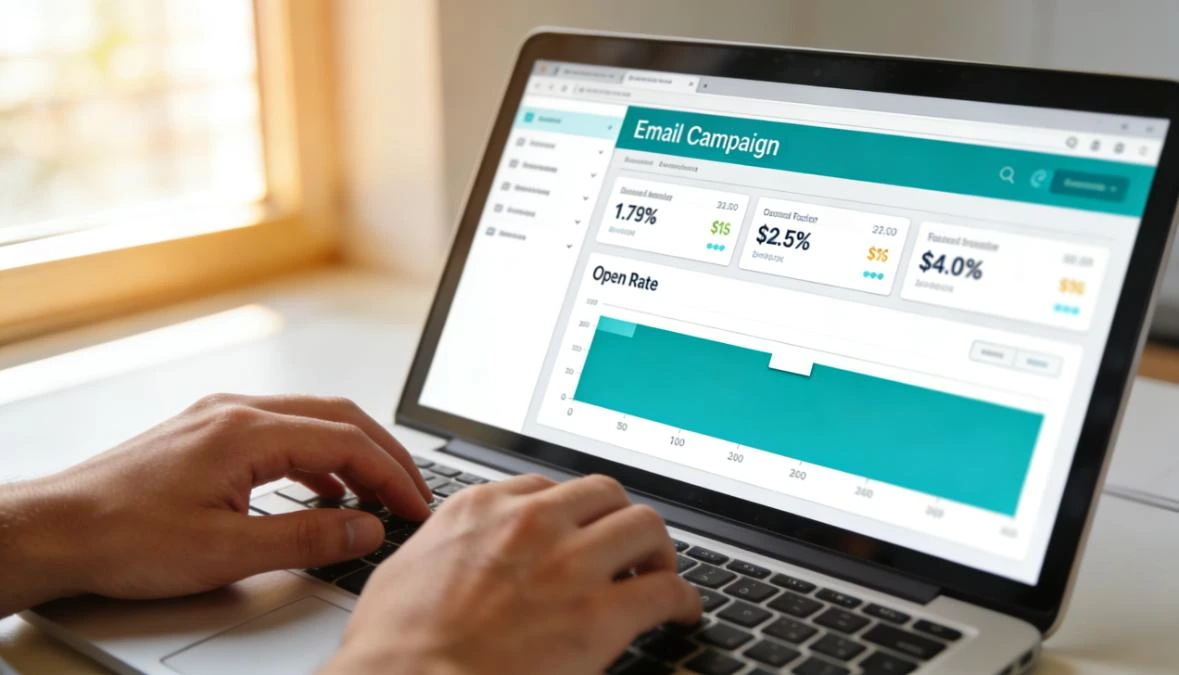
Most email tools, including ESC Hub, show your open rate by campaign. Look at what you have already sent. Pattern recognition from your own list is worth more than any industry benchmark.
The best time to send emails for small business owners
If you are starting out and want a default to work from: Tuesday, Wednesday, or Thursday between 9am and 11am in your subscribers' primary time zone.
That is not a magic window. It is a reasonable starting point that avoids the worst-performing slots (Monday mornings when inboxes are flooded, Friday afternoons when attention is elsewhere, weekends for business content) while landing when most people are actively checking email.
Once you have sent 8 to 10 campaigns, review your open rate data and look for patterns. Did a Thursday send outperform your Tuesday ones? Did the 8am email get fewer opens than the 10am? Let that data guide your next adjustment - not a generic report.
One thing worth noting: for a nurture email sequence, the timing between emails often matters more than the time of day. Spacing matters. Consistency matters. Whether the subscriber remembers who you are when your email arrives matters. We will come back to that.
Why your email type matters more than your send time
Not all emails are the same - and the right send strategy depends on what you are actually sending.
There are three main types of emails most small business owners send, and each has different timing logic.
A broadcast email is a one-to-many announcement: a new offer, a promotion, a piece of content, an event. It competes with every other email hitting inboxes that day. Timing has the most influence here, because you are trying to land in an active inbox window. This is where the Tuesday/Thursday mid-morning guidance is most relevant.
A nurture email sequence is an automated series triggered when someone joins your list - typically after downloading a lead magnet or signing up for a trial. These emails are not sent to everyone at once. They go out on a schedule relative to each individual subscriber's join date. Timing here is about spacing and sequencing, not hour of day. A nurture sequence that delivers value, builds trust, and moves at a sensible pace will outperform a poorly written sequence sent at the statistically optimal hour every time.
A relationship email is different again - and worth understanding clearly, because it is the type most small business owners either skip entirely or do not realise they are sending.
What is a relationship email - and when should you send it?
In email marketing, a relationship email is a message that prioritises the connection over the conversion. It is not promoting anything. It is not announcing anything. It is a real piece of communication - a question, a personal update, a behind-the-scenes observation, something that makes the subscriber feel known rather than marketed to.
Relationship emails tend to get high open rates and high reply rates, because they feel different from everything else in an inbox. They read like an email from a person, not a brand. For small business owners building a list of potential clients or customers, this type of email does more for long-term open rates than almost any other tactic - including timing optimisation.
When should you send a relationship email? When you have something genuine to say. Not on a fixed schedule designed to hit a data window. The authenticity is the point.
If you are building a list inside ESC Hub and you are not yet including relationship emails in your mix, it is worth adding one every few sends. A simple question - "what is the biggest challenge you are dealing with right now?" - sent from your personal name with no images or design formatting will often outperform a polished broadcast three times its size. A well-structured client onboarding process can make sure new subscribers get the right type of email at the right stage of their journey with you.
How to build a nurture email sequence that works regardless of timing

A nurture email sequence is the series of emails a subscriber receives automatically after joining your list. It is one of the highest-leverage things you can set up as a small business owner - because it works while you are not.
A simple, effective sequence for a small business list looks like this:
Email 1 - Welcome and delivery. Sent immediately on sign-up. Delivers what was promised, confirms they are in the right place, and sets expectations for what is coming. Keep it short.
Email 2 - Value. Sent 1 to 2 days later. One useful piece of content, insight, or perspective relevant to why they joined. No pitch.
Email 3 - Value plus connection. Sent 2 to 3 days later. Another useful piece - and a brief, real piece of your story or perspective that makes the sender feel like a person rather than a list.
Email 4 - Soft offer. Sent 3 to 4 days later. An invitation, not a push. "Here is what we have if you are ready for the next step."
The spacing in this sequence matters more than the hour of day. Too fast and it feels aggressive. Too slow and they forget who you are. For email marketing tips for small businesses, the principle is: earn trust before you ask for anything.
Automation is what makes this work consistently. Setting up how automation works for small businesses inside ESC Hub means every new subscriber gets the same trust-building experience.
The one thing that will improve your open rates more than any schedule change
List warmth.
If your subscribers expect your emails, recognise your name, and have previously found your content worth opening - they will open your next one. The best time of day for email marketing to a cold, disengaged list is irrelevant. The best time to send to a warm, well-nurtured list is almost any time.
This is why the email marketing tips for small businesses that have the longest shelf life are not about timing. They are about consistency, relevance, and making sure every email you send earns its place in someone's inbox.
Send regularly enough that subscribers remember you. Send something worth opening every time. Reply when people reply to you. Use your email list for small business growth the way it was designed to be used - as a direct line to people who have put their hand up and said they want to hear from you.
Get that right, and Tuesday at 10am versus Thursday at 11am becomes a rounding error.
For most coaches, managing email, automations, and the rest of your business in one platform also means a lower monthly outlay than running those tools separately.
For a tool that makes it simple to set up automated sequences, track your open rates, and manage your entire email list in one place - start your free 14-day ESC Hub trial at eschub.com.
Find this useful? Click the Image below to save it for later.